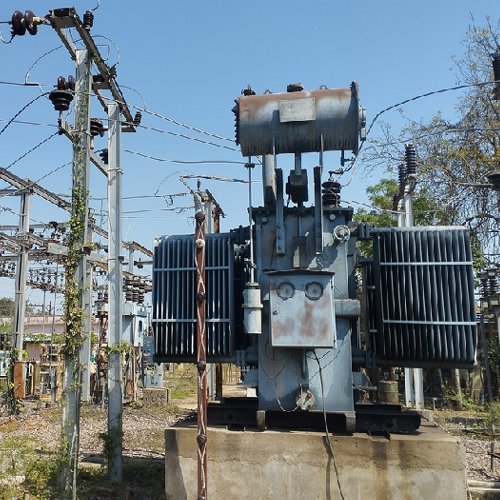
Reliable electrical infrastructure begins with equipment that is correctly engineered for its intended duty. A transformer is not simply an assembled electrical product; its performance depends on the interaction of magnetic design, winding geometry, insulation, thermal behaviour, mechanical strength, enclosure construction, and operating conditions.
Atlanture Transformer & Switchgear Pvt. Ltd. provides engineered transformer solutions for industrial, infrastructure, commercial, utility, and renewable-energy applications. As a trusted Transformer Manufacturing Company in Madhya Pradesh based in Varanasi, Uttar Pradesh, the company combines manufacturing capability with field experience in transformer erection, testing, commissioning, maintenance, repair, and breakdown support. This broader technical understanding helps connect manufacturing decisions with actual site requirements.
Each project is approached according to its electrical duty, installation environment, loading pattern, space limitations, protection requirements, and expected service conditions rather than treating every requirement as a standard application.
Before fabrication begins, the transformer requirement needs to be understood in practical terms. Rated capacity is only one part of the design. For businesses seeking specialized Transformer Design Services in Madhya Pradesh, evaluating comprehensive project inputs is essential for long-term performance.
Important project inputs can include:
These factors influence the selection and sizing of the magnetic circuit, windings, insulation system, cooling arrangement, tank or enclosure, terminals, and accessories. A properly engineered unit should therefore be matched to the complete electrical system rather than selected only by its nameplate capacity.
Transformer reliability is strongly influenced by manufacturing discipline. In delivering high-quality Transformer Manufacturing Services in Madhya Pradesh, core preparation, winding work, insulation handling, mechanical assembly, connections, and finishing must be carried out with attention to dimensional accuracy and cleanliness.
The manufacturing process involves several technically important stages:
The magnetic core provides the path for alternating magnetic flux. Core material selection, joint construction, clamping, and assembly accuracy affect no-load losses, magnetising current, acoustic behaviour, and overall efficiency. Careful handling during assembly is important because damage to core surfaces or improper clamping can affect long-term performance.
Winding geometry has a direct relationship with electrical performance and mechanical strength. Conductors, insulation materials, winding dimensions, clearances, and connections are selected according to the required electrical duty. The winding structure must also withstand mechanical forces that can develop during external short-circuit conditions. This makes winding support and mechanical integrity just as important as electrical design.
Insulation separates electrical potentials and protects the active components against electrical stress. Correct insulation coordination requires appropriate clearances, creepage distances, insulation materials, and processing practices. Moisture control and cleanliness during manufacturing are particularly important because contamination or absorbed moisture can negatively influence dielectric performance.
For oil-filled equipment, the tank must provide mechanical protection and maintain oil containment under operating conditions. Weld quality, dimensional accuracy, mounting arrangements, surface preparation, and finishing all contribute to service reliability. For dry-type equipment, the enclosure and ventilation arrangement need to support heat dissipation while maintaining suitable protection for the electrical assembly.
The manufacturing approach can be configured around the requirements of different electrical installations, ensuring clients receive dependable Transformer Manufacturing Services in Madhya Pradesh tailored to their operational needs.
Key features may include:
The exact configuration depends on the project's voltage, capacity, environment, duty cycle, and technical specification.
A transformer specification should define more than rated capacity. A complete technical schedule normally considers the following parameters:
|
Parameter |
Typical Design Consideration |
|
Rated Capacity |
Selected according to connected and anticipated load |
|
Voltage Ratio |
Determined from system operating voltages |
|
Frequency |
Matched to the electrical network |
|
Phase Configuration |
Single-phase or three-phase application |
|
Cooling |
Selected according to losses, loading and installation conditions |
|
Insulation Level |
Based on system voltage and required withstand capability |
|
Impedance |
Coordinated with system fault levels and voltage regulation |
|
Temperature Rise |
Established according to applicable design requirements |
|
Losses |
Evaluated for both no-load and load conditions |
|
Installation |
Indoor, outdoor, industrial or utility environment |
|
Accessories |
Selected according to protection, monitoring and operating requirements |
Actual values should always be established from the approved project specification and applicable standards rather than assumed from a generic product range.
Testing provides evidence that the manufactured unit conforms to its intended electrical and mechanical requirements. Depending on the design and project specification, testing may cover areas such as:
Testing is particularly important for large industrial installations because identifying an issue before dispatch is considerably easier than correcting a problem after energisation. Documentation and test records also provide useful technical references for commissioning, maintenance, and future troubleshooting.
A properly engineered transformer can provide several practical advantages throughout its operating life:
Transformer solutions can be engineered for a wide range of applications, including:
Different applications create different electrical demands. A manufacturing plant may experience substantial motor starting currents, while a renewable-energy installation may require careful coordination with power-conversion equipment. Commercial infrastructure may place greater emphasis on space, noise, safety, and continuity of supply. Understanding these differences is essential when developing the final design.
Manufacturing and field service should not be viewed as separate disciplines. Utilizing professional Transformer Engineering Services in Madhya Pradesh ensures that field experience with installation, testing, commissioning, repair, maintenance, and breakdown conditions provides valuable insight into the problems that electrical equipment can encounter after leaving the factory.
This practical perspective helps manufacturers consider accessibility, connection arrangements, maintenance requirements, operating conditions, and commissioning procedures during the engineering stage. For industrial clients seeking end-to-end Transformer Manufacturing Services in Madhya Pradesh, this integrated capability simplifies coordination between equipment selection and site execution.
Every electrical project has its own operating conditions. The right approach is therefore to begin with the application, establish the technical requirements, develop the appropriate design, manufacture under controlled conditions, test the completed unit, and support the equipment through installation and commissioning.
Atlanture Transformer & Switchgear Pvt. Ltd. supports this complete engineering approach from its Varanasi base, delivering reliable Transformer Manufacturing Services in Madhya Pradesh alongside transformer-related technical services for projects across the country.
For a new industrial installation, capacity expansion, infrastructure project, renewable-energy development, or replacement requirement, the most useful starting point is a detailed technical discussion covering the electrical system, loading conditions, installation environment, required ratings, and project schedule.
Share your project requirements with Atlanture Transformer to discuss how our expert Transformer Design Services in Madhya Pradesh and comprehensive Transformer Engineering Services in Madhya Pradesh can support your specific application.
Contact Us
Feel Free To Get In Touch With Us
Office Address:
Plot no F-24 Ramnagar Industrial Area Phase -II Varanasi, Uttar Pradesh- 232104 India.
Follow Us:-