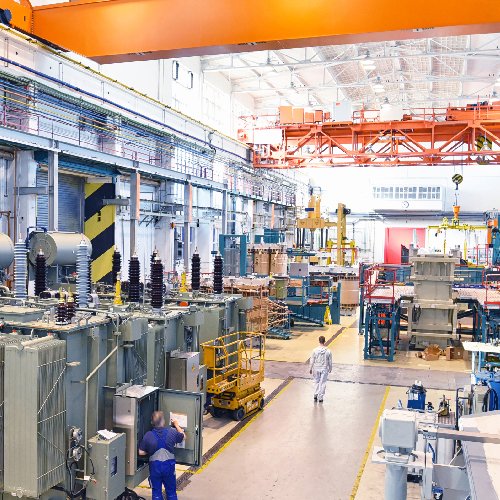
A dependable electrical power system begins with equipment that can handle real operating conditions, not just laboratory specifications. Transformers sit at the heart of many industrial, commercial, utility, infrastructure, and energy installations, where their performance directly affects voltage stability, equipment protection, operating efficiency, and continuity of supply.
Atlanture Transformer & Switchgear Pvt. Ltd. approaches transformer engineering as a complete project requirement rather than a simple equipment transaction. Based in Varanasi, Uttar Pradesh, the company supports customers with transformer manufacturing and associated electrical services, including erection, testing, commissioning, maintenance, repair, and breakdown support across Chandragiri.
The engineering approach considers electrical ratings, installation conditions, cooling requirements, insulation coordination, physical dimensions, protection requirements, and the intended duty of the transformer before finalizing a solution. This helps industrial buyers select equipment that is technically appropriate for their application and practical to operate throughout its service life.
Transformer selection should never be based only on voltage and capacity. The actual operating environment determines many of the design decisions that influence reliability.
A transformer installed inside a manufacturing plant may have very different requirements from one serving an infrastructure project, commercial facility, renewable-energy installation, or distribution network. Load characteristics, ambient temperature, space limitations, duty cycle, harmonics, altitude, installation arrangement, and future expansion can all influence equipment selection.
A project-focused engineering process therefore considers:
This application-led approach reduces the risk of selecting equipment that appears suitable on paper but performs poorly under actual operating conditions.
Transformer reliability depends on hundreds of individual manufacturing decisions. Core construction, winding geometry, insulation, mechanical strength, connections, tank fabrication, cooling arrangements, and final assembly all have to work together as one electrical and mechanical system.
The manufacturing process begins with appropriate material selection and dimensional control. The magnetic core must be assembled accurately to minimize unnecessary losses and support efficient operation. Windings require controlled fabrication so that electrical clearances, conductor placement, insulation systems, and mechanical strength remain within the intended design parameters.
Particular attention is required during winding and insulation assembly. Electrical stress is influenced by winding arrangement, insulation distances, conductor configuration, and the behaviour of the insulation system under operating and transient conditions.
Mechanical construction is equally important. The transformer tank, covers, supports, terminals, cooling components, and other fabricated parts must withstand handling, transportation, environmental exposure, and operating stresses.
Quality control at different manufacturing stages helps identify deviations before the finished equipment reaches the testing stage.
The equipment and engineering approach can be configured around different project requirements and operating environments.
The combination of electrical design and mechanical fabrication is particularly important for industrial installations where equipment may experience frequent loading changes, demanding environmental conditions, or limited maintenance access.
The final technical specification should be established from the electrical system and project requirements rather than selected from a generic catalogue.
Typical parameters evaluated during engineering include:
|
Parameter |
Project Consideration |
|
Rated Capacity |
Determines the intended electrical loading capability |
|
High-Voltage Rating |
Matches the incoming electrical system |
|
Low-Voltage Rating |
Matches the downstream distribution requirement |
|
Frequency |
Selected according to the electrical network |
|
Phase Configuration |
Based on system architecture and application |
|
Cooling Method |
Determined by rating, environment, and operating conditions |
|
Insulation System |
Selected according to voltage level and duty |
|
Installation Type |
Indoor or outdoor configuration |
|
Temperature Rise |
Considered for thermal performance |
|
Impedance |
Important for fault-current behaviour and system coordination |
|
Tap Arrangement |
Used where voltage adjustment requirements exist |
|
Protection |
Selected according to system and operational requirements |
Actual ratings, dimensions, losses, impedance values, insulation levels, temperature-rise limits, and accessories should be finalized against the approved project specification and applicable testing requirements.
A properly engineered transformer can contribute to more than basic voltage conversion. Its design affects the overall performance and maintainability of the electrical installation.
Robust construction and appropriate electrical design help the equipment withstand its intended operating duty and support dependable power delivery.
Efficient core and winding design can help control electrical losses. Lower losses can contribute to improved operating economics over the equipment's service life.
Different projects require different electrical and mechanical configurations. Engineering flexibility allows the equipment to be adapted to installation and system requirements.
Considering installation conditions, connections, protection, cooling, transportation, and commissioning requirements during the engineering stage helps simplify integration into the wider electrical system.
A transformer is a long-life asset. Proper design, manufacturing control, testing, maintenance planning, and technical support can help reduce avoidable operational interruptions.
Transformer systems are used wherever electrical energy must be transformed and distributed safely and efficiently.
Typical applications include:
The correct equipment depends on the site's electrical architecture, load profile, environmental conditions, and operational objectives. For this reason, engineering assessment should precede final equipment selection.
Testing is a critical stage between manufacturing and site installation. It provides an opportunity to verify that the finished equipment conforms to the intended design and project requirements.
Depending on the transformer type and approved test plan, verification may involve electrical, insulation, ratio, winding, loss, impedance, and other relevant checks. Mechanical inspection also helps confirm the condition of fabricated components, connections, bushings, terminals, enclosure construction, and accessories.
Testing becomes even more important when equipment is being prepared for a major industrial installation because transportation and commissioning schedules often depend on equipment reaching the site in an acceptable condition.
A controlled testing process provides project teams with greater confidence before energization.
Transformer supply does not end when the equipment leaves the manufacturing facility. Installation quality can have a significant effect on subsequent performance.
Site activities may include positioning, connection checks, inspection, testing, commissioning, and coordination with the electrical system. Maintenance and breakdown support are also important for installations where unexpected equipment problems can affect production or power availability.
Atlanture's broader service capability includes erection, testing, commissioning, maintenance, repair, and breakdown support, allowing customers to address multiple stages of the equipment lifecycle through one technical partner.
For an industrial buyer, the lowest initial purchase price does not necessarily represent the lowest total cost. Transformer selection should consider reliability, losses, installation requirements, serviceability, testing, maintenance, expected operating conditions, and long-term technical support.
A capable engineering partner should be able to understand the electrical application, translate project requirements into a practical design, maintain manufacturing discipline, verify the finished equipment, and provide support after installation.
Atlanture Transformer & Switchgear Pvt. Ltd. combines transformer-related manufacturing with field-oriented electrical services, giving project teams access to support across manufacturing, installation, commissioning, maintenance, repair, and breakdown requirements.
Every transformer project has its own electrical and site conditions. The most effective starting point is a clear review of the required capacity, voltage levels, installation environment, load characteristics, cooling requirements, protection philosophy, physical constraints, and project schedule.
Share your technical requirements, electrical specifications, drawings, or project details with the engineering team. The requirement can then be evaluated from both manufacturing and site-application perspectives before the final configuration is established.
Choose a transformer solution engineered around your actual electrical system—not a generic specification. Contact Atlanture Transformer & Switchgear Pvt. Ltd. to discuss your project requirements, technical configuration, manufacturing needs, testing, installation, or ongoing service support.
Contact Us
Feel Free To Get In Touch With Us
Office Address:
Plot no F-24 Ramnagar Industrial Area Phase -II Varanasi, Uttar Pradesh- 232104 India.
Follow Us:-