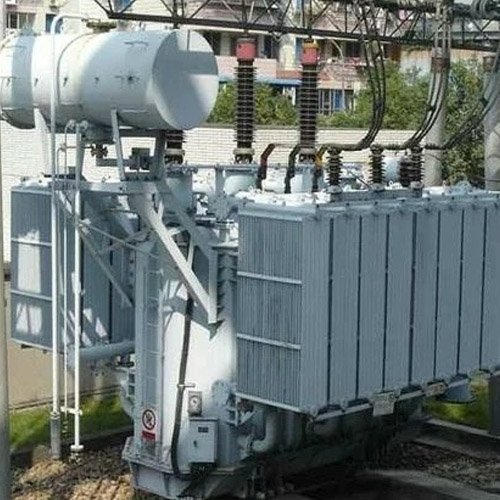
Electrical systems do not always operate under standard load conditions. Some installations require unusual voltage ratios, dedicated isolation, controlled power transfer, rectification support, frequent load variation, or integration with specialized industrial equipment. In such situations, a transformer has to be designed around the application rather than selected only from a standard catalogue. If you are sourcing a Special Purpose Transformer in Surat, custom engineering becomes essential.
Atlanture Transformer & Switchgear Pvt. Ltd. approaches these requirements through application-oriented transformer engineering. As a leading Special Purpose Transformer manufacturer in Surat, the company ensures the design process considers the electrical duty, connected equipment, operating environment, installation limitations, cooling requirements, insulation system, protection arrangement, and expected service conditions before determining the transformer configuration.
This approach is particularly valuable for industrial projects where transformer performance directly affects process reliability, equipment protection, operating efficiency, and maintenance requirements.
A special application begins with understanding how the transformer will actually be used.
Two transformers with similar voltage and capacity ratings can require significantly different internal designs when their operating duties are different. Continuous industrial loading, cyclic loading, high starting currents, harmonic-producing equipment, rectifier loads, furnace systems, testing equipment, and process machinery can all impose different electrical and thermal stresses.
Engineering considerations for a Special Purpose Transformer in Surat may include:
The objective is not simply to produce a transformer that meets a nameplate rating. The objective is to develop a unit capable of performing reliably under the actual conditions for which it will be installed.
Transformer reliability starts well before final assembly. Core selection, winding configuration, insulation coordination, mechanical construction, thermal design, enclosure arrangement, and connection layout all influence the finished equipment.
Magnetic Circuit
The magnetic core provides the path for alternating magnetic flux. Proper core design helps control excitation current and no-load losses while maintaining suitable operating flux density.
Core joints, clamping arrangements, mechanical rigidity, and insulation between relevant components require careful attention during manufacturing. Poor mechanical control can contribute to vibration, acoustic noise, or long-term deterioration.
Winding Construction
Winding design is determined by the required voltage, current, insulation level, thermal duty, physical arrangement, and application.
Conductors are selected according to current density and thermal requirements. The winding arrangement is then developed to provide appropriate electrical insulation and mechanical strength.
For demanding industrial applications, mechanical integrity is particularly important because electromagnetic forces can become significant during fault conditions.
Insulation System
The insulation system separates conductors operating at different electrical potentials and provides the necessary dielectric strength throughout the expected service life.
Insulation selection depends on voltage level, temperature rise, cooling medium, construction method, environmental conditions, and required clearances.
Attention to insulation distances, winding-to-winding separation, winding-to-core clearances, barriers, supports, and termination arrangements is essential for dependable operation.
Tank, Enclosure and Mechanical Fabrication
For oil-filled constructions, the tank and associated fittings must provide mechanical strength and suitable containment. Welded structures require appropriate fabrication practices to maintain dimensional accuracy and integrity.
For dry constructions, the enclosure and ventilation arrangement become especially important because heat must be transferred effectively to the surrounding environment.
The final mechanical arrangement also needs to account for lifting, transportation, installation access, cable entry, earthing, and maintenance.
The configuration of each unit can be developed according to the electrical and mechanical requirements of the project.
Key features may include:
The exact construction is established from the approved technical requirements rather than treating every application as identical.
Choosing an application-engineered Special Purpose Transformer in Surat can provide advantages beyond basic voltage conversion.
Better Compatibility
The electrical characteristics can be coordinated with the equipment receiving power, reducing the risk of unsuitable voltage, connection, or loading conditions.
Improved Operational Reliability
A transformer designed around the actual duty can better accommodate the thermal and mechanical stresses associated with the installation.
Greater Design Flexibility
Non-standard voltage combinations, connection arrangements, physical dimensions, and installation requirements can be incorporated when justified by the project.
Equipment Protection
Correct isolation, insulation coordination, impedance considerations, earthing arrangements, and protection interfaces can contribute to safer operation of connected equipment.
Easier Project Integration
Mechanical dimensions, cable terminations, mounting arrangements, cooling provisions, and accessories can be considered as part of the overall equipment interface.
Long-Term Maintainability
Accessible connections, appropriate fittings, logical construction, and suitable monitoring provisions can simplify inspection and maintenance during the operating life of the equipment.
Application-specific transformers can support a broad range of electrical and industrial systems.
Typical applications include:
The correct design depends on the actual characteristics of the connected load. For example, a transformer supplying a stable continuous load may have very different design priorities from one feeding equipment with repeated starting, stopping, or rapidly changing current demand.
A project specification can be developed around the following parameters:
|
Parameter |
Engineering Requirement |
|
Transformer Type |
Application-dependent |
|
Rated Capacity |
As specified by project load |
|
Input Voltage |
As required |
|
Output Voltage |
As required |
|
Frequency |
As required by the electrical system |
|
Phase |
Single-phase or three-phase as applicable |
|
Number of Windings |
Based on application |
|
Cooling Method |
Selected according to thermal duty |
|
Insulation System |
Selected according to voltage and operating conditions |
|
Connection Arrangement |
Application-specific |
|
Impedance |
Determined during design |
|
Temperature Rise |
Established according to design and applicable requirements |
|
Enclosure |
Suitable for installation environment |
|
Mounting Arrangement |
Based on site requirements |
|
Termination |
Cable, busbar, or project-specific arrangement |
|
Earthing Provision |
As required by system design |
|
Accessories |
Selected according to application and monitoring requirements |
Final values should always be established from the approved electrical specification, load characteristics, installation environment, and applicable project standards.
A technically sound enquiry should provide more than only the required capacity when working with a Special Purpose Transformer supplier in Surat.
The engineering team should ideally receive:
Providing these details at the enquiry stage helps reduce redesign, clarification cycles, and installation problems later in the project.
A transformer should be evaluated not only by its appearance or nameplate rating but by its electrical, mechanical, and thermal performance.
Depending on the design and project requirements, inspection and testing can address areas such as winding resistance, transformation ratio, polarity or vector relationship, insulation performance, losses, impedance, dielectric performance, and other applicable routine or design verification requirements.
Documentation is equally important for industrial procurement. Working with a reliable Special Purpose Transformer distributor in Surat ensures that technical drawings, nameplate information, test documentation, inspection records, and installation information are fully provided to help the purchaser maintain proper equipment records throughout the asset's operating life.
Specialized electrical equipment demands a different level of engineering discipline. The transformer must fit the electrical system, the physical installation, and the operating reality of the plant.
Atlanture Transformer & Switchgear Pvt. Ltd. provides an application-focused approach from technical discussion and design development through manufacturing and project support. As a trusted Special Purpose Transformer manufacturer in Surat, its Varanasi facility serves industrial requirements while the company supports projects across Surat.
For a new project, replacement requirement, capacity modification, or unusual electrical application requiring a high-performance Special Purpose Transformer in Surat, the most effective starting point is a detailed technical discussion. Share the electrical parameters, load characteristics, installation conditions, and required configuration so the appropriate design can be evaluated before manufacturing begins.
Discuss your application requirements with the engineering team and request a project-specific technical proposal from a dependable Special Purpose Transformer supplier in Surat.
Contact Us
Feel Free To Get In Touch With Us
Office Address:
Plot no F-24 Ramnagar Industrial Area Phase -II Varanasi, Uttar Pradesh- 232104 India.
Follow Us:-