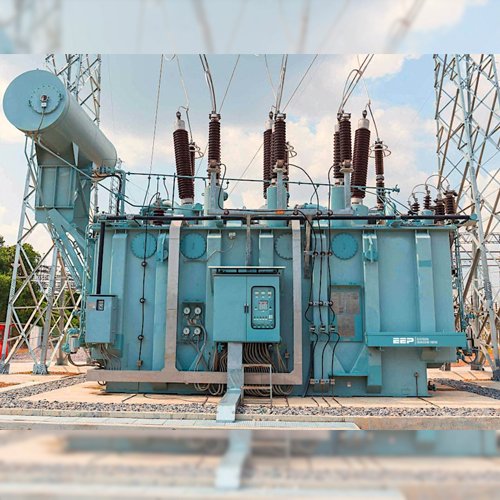
Reliable transformation of electrical power is not simply a matter of changing voltage from one level to another. For industrial plants, substations, infrastructure projects, utilities, and large commercial installations, choosing the right Power Transformer in Kadapa has a direct influence on system reliability, operating losses, equipment protection, maintenance requirements, and long-term power availability.
Atlanture Transformer & Switchgear Pvt. Ltd. develops transformer solutions around these practical requirements. Based in Varanasi, the company operates as a leading Power Transformer manufacturer in Kadapa, combining transformer manufacturing with engineering support, testing, erection, commissioning, maintenance, and breakdown assistance for projects across the country.
The approach is centered on application-specific engineering rather than treating every project as a standard installation. Voltage levels, capacity, loading characteristics, installation conditions, cooling requirements, insulation coordination, available space, and operating environment all influence the final configuration.
A transformer intended for a continuously loaded industrial plant has different design considerations from one installed in a utility substation or infrastructure project. Selecting capacity only from the present connected load can also create problems when future expansion, motor starting, seasonal demand, or load diversity is considered.
Before finalizing a design, important project parameters include:
This engineering-first approach helps ensure that the equipment is appropriate not only for initial commissioning but also for the operating conditions expected throughout its service life.
The performance of a transformer depends heavily on the quality and accuracy of its active components.
The magnetic core provides the path through which alternating magnetic flux circulates. Electrical steel is selected and processed with attention to magnetic characteristics and core-loss performance. Accurate cutting, joint preparation, stacking, and assembly are important because unnecessary air gaps, mechanical distortion, or poor clamping can increase losses, noise, and localized heating. Core assembly therefore requires controlled fabrication rather than simply assembling pre-cut material.
Windings must withstand electrical stress, thermal loading, and mechanical forces produced during faults. Conductor selection, insulation arrangement, winding geometry, turn distribution, axial support, radial clearances, and mechanical bracing all influence the final performance. Copper or aluminium conductors may be selected according to the required electrical and mechanical design. Winding operations are carried out with dimensional accuracy so that the finished assembly maintains the specified clearances and withstands operating stresses.
Insulation is one of the most critical parts of transformer construction. It separates conductors electrically while allowing the equipment to operate safely at its specified voltage. The insulation system may incorporate paper-based materials, pressboard components, barriers, spacers, and insulating liquid depending on the design. Proper drying, handling, assembly, and impregnation are essential because moisture and contamination can significantly affect dielectric strength and long-term reliability.
A transformer should not be considered ready simply because its mechanical assembly is complete. Electrical verification is necessary to confirm that the manufactured unit performs according to its design.
Testing may include:
Testing provides an additional layer of confidence before dispatch and helps identify manufacturing or assembly issues before the equipment enters service. For project buyers, working with a trusted Power Transformer supplier in Kadapa is particularly important because transformer replacement or major corrective work after installation can involve substantial downtime, transportation, labour, and system interruption.
The final specification is established according to the electrical duty and project requirements rather than using one fixed configuration for every application.
Typical specification parameters include:
|
Parameter |
Project-Specific Consideration |
|
Rated Capacity |
Selected according to present and anticipated load |
|
Voltage Ratio |
Defined according to network requirements |
|
Frequency |
Matched to the electrical system |
|
Phase |
Single-phase or three-phase as required |
|
Winding Material |
Copper or aluminium based on design |
|
Cooling |
Selected according to rating and operating conditions |
|
Insulation System |
Designed for required dielectric and thermal performance |
|
Impedance |
Established according to system and fault-level requirements |
|
Connection |
Determined by network configuration |
|
Enclosure/Tank |
Designed for installation and environmental conditions |
|
Accessories |
Selected according to monitoring, protection, and operational requirements |
Final technical documentation should always be reviewed against the project's electrical specifications, applicable standards, site conditions, and utility or consultant requirements before manufacturing approval.
The equipment is developed with attention to the areas that have the greatest effect on operational reliability.
A well-engineered transformer can contribute to more than dependable voltage conversion. Correct design and manufacturing can influence the total operating economics of an electrical installation.
Key benefits include:
For procurement teams, sourcing through a reliable Power Transformer distributor in Kadapa or directly from the manufacturer ensures that the practical comparison includes manufacturing quality, technical compliance, testing documentation, delivery capability, installation support, maintenance expertise, and expected lifecycle performance.
These transformer solutions can be considered for installations where dependable power transformation is fundamental to continuous operation.
Transformer reliability is influenced by decisions made throughout the manufacturing process. A specification can look correct on paper while poor fabrication, inadequate insulation handling, inaccurate winding dimensions, insufficient mechanical support, or weak quality control can compromise actual performance.
Atlanture Transformer & Switchgear Pvt. Ltd. operates from its manufacturing base in Varanasi and supports customers with both equipment and associated technical services as a reputable Power Transformer manufacturer in Kadapa. Its broader service capability covers transformer erection, testing, commissioning, maintenance, repair, overhauling, oil filtration, and breakdown support, creating continuity between manufacturing and field requirements.
The company serves projects across multiple regions, operating as a full-service Power Transformer supplier in Kadapa for Uttar Pradesh, Bihar, Jharkhand, Delhi NCR, Rajasthan, Madhya Pradesh, and other locations through its wider service network.
Before requesting a commercial proposal, project teams should have the following information available:
Providing accurate information at the enquiry stage allows the engineering team to evaluate the application properly and propose a configuration suited to the actual electrical system.
For critical electrical infrastructure, the purchase decision should not end with selecting a manufacturer and comparing quotations. Sourcing a high-performance Power Transformer in Kadapa combines appropriate engineering, controlled manufacturing, documented testing, dependable delivery, installation support, and access to technical assistance throughout the equipment's operating life.
Atlanture Transformer brings these requirements together through manufacturing and field-service capabilities designed for industrial and infrastructure applications.
Share your electrical requirements, capacity, voltage details, installation conditions, and project specifications with the engineering team to discuss a custom Power Transformer in Kadapa configuration and obtain a project-specific quotation.
Contact Us
Feel Free To Get In Touch With Us
Office Address:
Plot no F-24 Ramnagar Industrial Area Phase -II Varanasi, Uttar Pradesh- 232104 India.
Follow Us:-